

The Basics of Enrolling in a Medicare Supplement Plan
Medicare is really a government-sponsored medical insurance program for senior and disabled citizens. But with all the current gaps in coverage, many Medicare beneficiaries are often left with medical bills they can't afford. This really is where Medicare Supplement Plans, also called Medigap policies, come in. In this post, we will discuss what Medicare Supplement Plans are, what they cover, who needs them, and why they're important.
Medicare Supplement Plans are plans provided by private insurance companies. They help fill out the gaps in Medicare coverage, such as deductibles, coinsurance, and copayments. You will find ten standardized Medigap policies available, labeled as A, B, C, D, F, G, K, L, M, and N. Each standardized plan offers a different level of coverage, but all of them must follow federal and state laws. Therefore, the advantages and costs of a lettered plan are exactly the same, whatever the insurance company offering it.
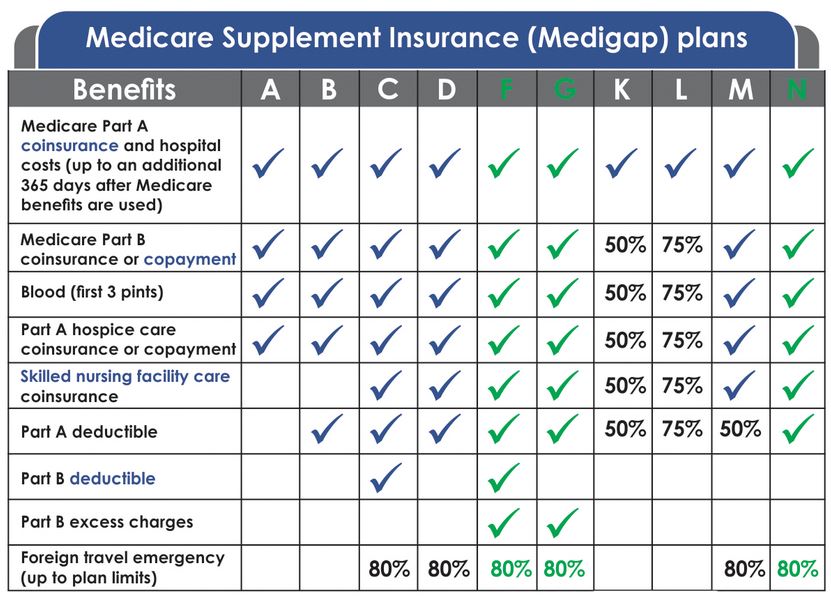
Medicare Supplement Plans do not cover prescription drug coverage, dental, vision, or hearing expenses. For these things, beneficiaries need to get separate plans such as Medicare Prescription Drug Plans (Part D). Remember that you have only half a year to buy a Medigap policy, starting the month you're 65 years or older and enrolled in Medicare Part B. Next period, you could be subjected to medical underwriting, meaning the insurance company can charge you a higher premium, based on your quality of life status.
When you yourself have Original Medicare and a Medicare Supplement Plan, Medicare can pay its share of the Medicare-approved amount for covered health care costs. Next, your Medigap policy will pay its share. This means that you will likely have little to no out-of-pocket expenses for medical services. As an example, if a medical procedure costs $1,000, and Medicare's approved amount is $600, Medicare can pay $480 (80% of the approved amount), and your supplement plan will cover the residual $120.
When it comes to selecting a Medicare Supplement Plan, the most used plan is F. It covers all of the gaps in Original Medicare, including foreign travel emergency medical coverage. However, by January 1, 2020, Plan F is no more open to new beneficiaries. If you'd Plan F before this date, you are able to keep it. But when you're a new comer to Medicare, Plan G is probably the most comprehensive plan currently offered. It covers all the gaps in Medicare, except the Part B deductible, that is $203 for 2021.

Conclusion:
Medicare Supplement Plans will save you a lot of money on healthcare expenses, including hospital stays, doctor visits, and medical procedures. When you have Original Medicare, it's essential to take into account a Medigap policy to simply help cover the gaps in coverage. Be sure to research the different types of plans and compare premiums before choosing one that suits your preferences and budget. Remember that the open enrollment period for Medigap policies is six months starting the month you turn 65, so don't wait a long time to create a decision. Plan ahead and enjoy peace of mind knowing you've the coverage you need.
kindly visit the website at https://www.comparemedicaresupplementplans.org/ to get the knowledge about Medicare Supplement Plans.